News Category

Blog

You are here: Home > Blog

Why Spot-Welded Ironer Roll Dividers Are Ruining Your Linens

Potential Hazards of Custom-Welded Guide Dividers on Ironer Rolls
 
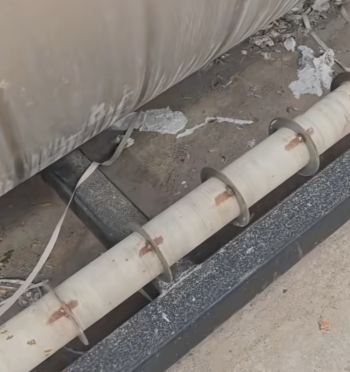
Many clients are now welding custom metal guide pieces (dividers) directly onto ironer rolls to improve belt tracking and efficiency. While these metal dividers—often coated with anti-rust paint—appear more durable than standard plastic sleeves, they are frequently spot-welded rather than fully welded.  

Over time, continuous friction from the ironing belts wears away the anti-rust paint at these weld points, leading to three major operational hazards:


  1. Rust Formation from Moisture Exposure: The exposed steel at the worn weld points rusts quickly when exposed to high moisture. This is especially critical on the first two rolls, which handle heavily damp linens and sheets.
  2. Accelerated Belt Wear and Misalignment: Once rust forms, the abrasive steel surfaces accelerate wear on the belt edges. This causes uneven belt tracking, destabilizes tension, and directly compromises overall ironing quality.
  3. Linen Staining and Discoloration: Rust residue transfers onto the ironing belts. Moisture from the linens then draws this rust through the belt fabric, depositing stubborn stains onto clean sheets and duvet covers.


Our Recommendations and Solutions:
      Material Upgrade: To eliminate these risks, we highly recommend using at least 304 stainless steel for all guide dividers.
 
    • Custom Belt Widths Available: We have observed that client-installed dividers vary significantly in spacing, with widths measuring 210mm, 205mm, 195mm, and so on. These non-standard gaps require custom-width ironing belts. HongKong Xinyun can supply ironing belts in any custom width, with no minimum order quantity (MOQ).